
Get a 90% discount off Bloomberg’s No.1 competitor. Get a 30-day free trial here
When you search for cheap stocks, you inevitably end up in Japan.
The culture there is interesting because they are highly conservative which leads to cash piling up on the balance sheet.
In many cases, the cash does nothing useful, other than help management sleep soundly at night.
It’s not returned to shareholders in any meaningful way and the business just trundles along without any ambition.
Despite this, many stocks are priced so low that the only meaningful direction they can travel is up.
Individually, these stocks might resemble ‘zombies’ that go nowhere.
However, the group-dynamic of such stocks tends to produce pretty nice returns over time.
This is all down to the ‘coiled spring’ analogy often used by Walter Schloss to describe why cheap stocks represent an asymmetric bet.
If you hold a group of very cheap stocks with minimal downside risk, some of them will inevitably improve their businesses or clean up their balance sheet.
When this happens, the re-rating is violent and aggressive to the upside.
This results in classic ‘portfolio’ behaviour, where a few stocks generate the return of the entire group.
This is why deep-value is so appealing to those that can stomach the uncertainty.
No matter how much you criticise or dismiss each business as a ‘shitco’ or ‘value trap’ the potential upside is always massive.
Today’s stock is already priced like it won’t make profit ever again. In fact, it’s priced like its tangible assets are worthless.
The reality is a business holding a fortress of liquidity and cash that far exceeds today’s market cap.
In other words, this is a perfect contender for a diversified group of dirt-cheap stocks.
A classic cigar-butt.
The downside risk is minimal while the upside potential is huge, even if nothing much happens with the business.
There is also no concentrated ownership that could realistically delist the business at today’s ridiculously low price, unless all the minority shareholders agreed.
This type of structure is always preferable in any deep-value set up.
Here are the valuation metrics:
NCAV Ratio = 0.9
TBV Ratio = 0.3
P/5Y FCF Ratio = 16
This tells us that the earnings are lame.
That doesn’t matter much because they are already priced at zero.
The key here is that the business is priced so low against its tangible assets.
If you bought the entire company for ¥2.92B today, you could liquidate the liquid assets, pay off every single debt and liability, and walk away with ¥5.12B in cash.
This is an immediate return of +75% purely from financial assets, while still retaining ownership of the land, buildings, inventory, and machinery.
In fact, the enterprise value of this business is negative if we include all debt-like obligations and all highly liquid assets (cash and marketable securities).
The EV figure is -¥2.1B.
Effectively, the market is suggesting that the business will burn through ¥2B of the cash pile before it ever becomes profitable again or liquidates.
As we shall see, this is highly unlikely.
The company currently offers a shareholder yield of 2.8%, after factoring in any dilution and SBC (of which there is almost none).
If you’re into net-nets and stocks trading at unrealistically low prices to assets, you might love this one.
Let’s take a look…
The Business
Almetax Manufacturing (5928) is a Japanese business headquartered in Osaka.
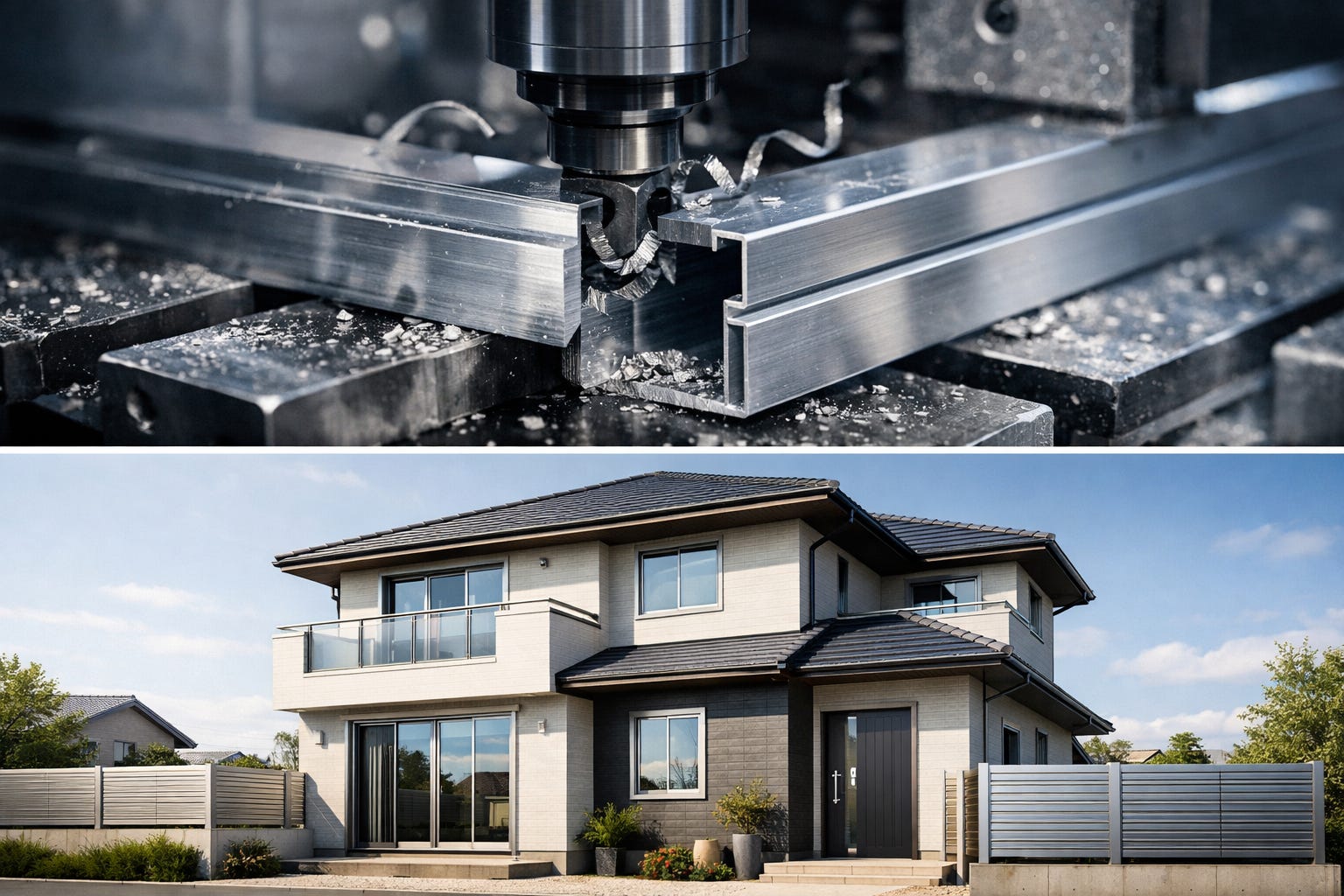
The company manufactures and sells housing construction materials, primarily using aluminium.
Its core products include window sashes, doors, exterior products (gates, fences), and interior construction materials.
It operates as a supplier tailored to specific major prefabricated housing manufacturers.
It’s been going (in various guises) since 1969.
The business operates as a single reportable segment known as the ‘Housing Construction Materials Division’.
Therefore, 100% of its revenue is derived from the manufacturing and sale of these building products.
While it is a single segment, the company breaks down its sales revenue by application type:
• New Detached Housing Materials: 75.0% (Materials for new construction)
• Renovation (Reform) Materials: 19.6% (Materials for home renovations)
• Other: 5.1% (Including gates, fences, window components, and interior building materials)
Almetax is heavily dependent on a few specific major customers, particularly companies within the Sekisui House Group, which is also its major shareholder.
Collectively, the top three customers account for over 72% of the company’s total sales.
The Sekisui House Group currently owns around 40% of Almetax stock, and is the largest holder.
This creates a situation where the largest customer is actively incentivised to ensure the success of Almetax in the long-run.
You might view that as a positive or negative depending on your disposition.
The company operates and sells only in Japan and spreads its operation across 5 factories in different areas of the country.
The operating business has been struggling with decline for the last few years.
This is all down to the shrinking of the housing market in Japan.
The primary driver of revenue decline is the contraction of the Japanese new housing market.
As a supplier heavily dependent on new construction (which accounts for 75% of sales), Almetax saw orders for its mainstay products drop.
In the most recent interim report (Sept 2025), management noted that new housing starts remain “weak” due to rising construction costs.
While sales volume fell, the cost to produce each unit rose.
Management cites “soaring prices of raw materials” (specifically aluminium) and “fuel prices” as major factors squeezing margins.
In FY25, they explicitly stated that cost reduction efforts “could not compensate for the profit decline caused by the decrease in sales and the high prices of raw materials and fuel”.
This has been a double-whammy for the business, which has caused operating profits to shrink.
To offset this, management has tried to expand their ‘renovation’ activities, but this has struggled to gain traction with all the headwinds going on.
The good news is that the crunch seems to be easing.
Management claims that the operating business has returned to profitability and that the problems with cost inflation seem to be bottoming out.
The Financials
Almetax operates as a simple manufacturing engine attached to a massive, highly liquid investment portfolio.
Think of this business as a specialised workshop that exists primarily to serve one giant customer:
Sekisui House.
The company buys raw aluminium, glass, and other parts.
These raw material costs are significant, accounting for roughly 69% of manufacturing costs.
It processes these materials at its factories into window sashes, doors, and exterior fencing.
It sells these finished goods almost exclusively to major housing manufacturers.
As mentioned, Sekisui House alone accounts for 51.4% of sales.
Because the main customer is its parent company (a ¥2.4T giant), the receivables here are as good as gold.
There is virtually no risk of non-payment.
The main issue here is that the engine has no pricing power.
When aluminium prices skyrocket (as they have recently), Almetax struggles to pass these costs on to Sekisui House quickly enough.
This squeezes the margin between the cost of the metal and the price of the finished window, resulting in the operating losses in recent years.
The Income Statement tells a story of a business fighting a losing battle against inflation and shrinking volume, while masking the pain with investment income.
The business has swung from a healthy operating profit in FY2022/23 to deep operating losses in FY2025.
It basically costs more to run the factory than the products are sold for.
In FY2025, the company reported a Net Profit of ¥27M despite losing ¥214M from operations, but this came from selling some securities.
Another thing to note is that sales fell 11.9% in FY2025, but the company could not cut operating costs fast enough (they only dropped 3%).
This reveals a high fixed-cost base that becomes tricky when margins fall and sales drop.
One interesting note however is how earnings are currently deviating strongly away from the average.
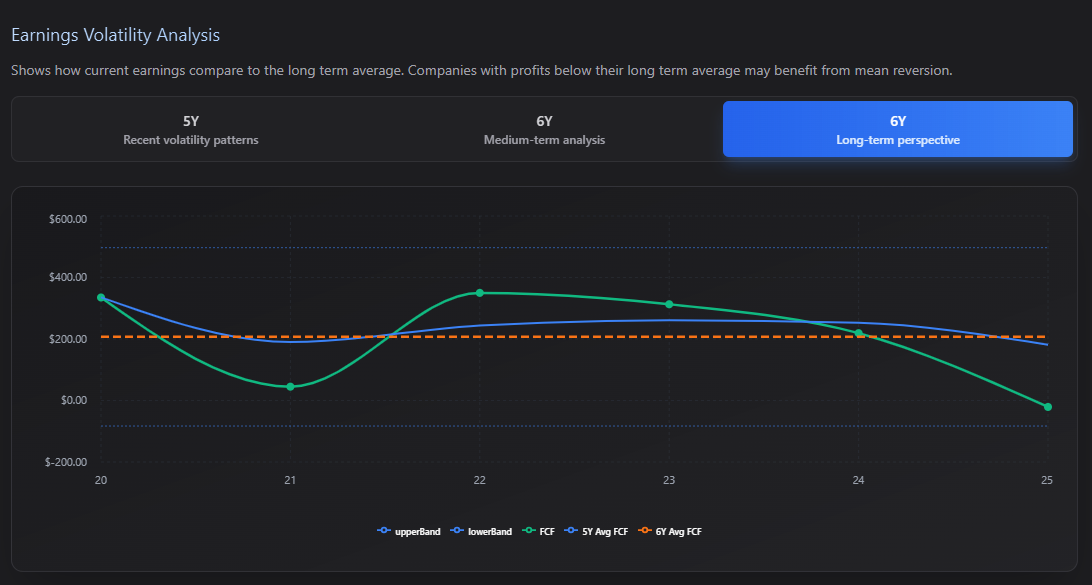
This is a nice set-up for some kind of mean-reversion.
In other words, it’s quite unlikely that the business will just continue losing money forever.
Eventually earnings will pick up, for one reason or another, which will trigger a re-rating.
Despite the ugly Income Statement, the company’s liquidity is pristine.
This is the primary attraction for someone like me, who views businesses through the lens of extractable cash in the real-world.
Total cash is around ¥1.9B
Debts are effectively ¥0
Marketable securities are roughly ¥3.5B
This provides a net-cash position of ¥5.4B against total liabilities of just ¥2.4B and a market cap of ¥2.9B.
To put this into perspective, last year the business burned cash and still paid its dividend.
The pay-out ratio was 300%.
The net-cash pile allows them to sustain this dividend for over 20 years, without any new operating profit at all.
The margin of safety from high quality, liquid assets is huge.
The business quality is mediocre, but the asset quality is pristine and deeply undervalued.
This whole set up rests on the fact that we’re buying a bank account worth double the asking price of the stock.
Why It’s Cheap
The primary reason for the low valuation is that the operating business is currently destroying value.
However, we need to put things into perspective.
The current operational losses are negligible when compared to the company’s immense liquidity.
Let’s assume a pessimistic scenario where the business continues to burn ¥200M in cash every single year, forever.
In that case, the company’s net-cash ¥5.4B would cover these losses for roughly 26 years.
I mention this to re-frame the market’s implication, that the business is dying, versus the reality of the margin of safety.
Another factor depressing the price is the structural decline of Japan’s housing market, thanks to the current population declines.
This is a legitimate concern imo, but it’s also an existential issue for Japan as a nation.
It’s unlikely that the entire country will simply wither away into oblivion.
At some point a reform or migration policy will be introduced to reverse this trend.
Even if it doesn’t, there are still numerous markets that aren’t dying that Almetax could serve, using its expertise.
Renovations is one area that it’s already working on.
Then we come to the obvious issues of customer-concentration and capital allocation.
These do put the business in a vulnerable position.
However, the mitigating factors of majority ownership and governance reforms in Japan (pressuring companies to return value to shareholders) also provide comfort.
The Risks
Obviously we have uncovered a few risks already here.
However, given the situation, there is only really one that stands out.
Management may simply choose not to fix the business or liquidate it.
They could continue to run the factory at a loss, slowly burning through the ¥5 billion cash pile over the next 20 years to pay salaries and maintain the supply chain for Sekisui House.
Minority shareholders would see the liquidation value slowly erode to zero without ever receiving a pay-out.
The stock price remains in limbo (although not falling much any time soon).
This is probably the worst case scenario that I can foresee happening in this particular set-up.
And of course, it’s a valid risk worth considering.
However, I also think it’s a pretty simple risk to mitigate and track over time.
The play here would simply be to monitor the FCF generation over the next couple of years to determine success in turning things around.
At the same time, we’d monitor the net-cash pile to check for any significant erosion.
If these things are going badly, we would likely give way to opportunity cost and remove capital from the stock to recycle it somewhere else.
The Investment Case
In simple terms, it’s hard to see ‘nothing positive’ happening within the next quarter of a century.
And, even the slightest bit of good news from the operating business will be enough to generate a market-beating re-rating.
An investment in Almetax at the current market capitalization of ¥2.9B offers extraordinary downside protection.
The company’s liquid assets alone far exceed the price you are paying for the entire business.
Essentially, we’re purchasing a basket of cash and stocks at a discount, while receiving the operating business and real estate for free.
This set up is also open to the top catalysts that we typically look for.
Almetax is an equity-method affiliate of Sekisui House, Ltd., which owns 35.7% of the shares.
Additionally, Sekisui Chemical Co., Ltd. owns 6.72%.
With the stock trading at a Price-to-Book ratio of roughly 0.3x, it would be financially accretive for Sekisui House to acquire the remaining shares.
They could pay a premium of 50% over the current price and still acquire the company for less than the value of its cash and assets.
If I were the majority owner here, it’s something I’d be seriously contemplating.
In fact, Sekisui wouldn’t even need to use its own cash.
It could simply use some of the Almetax cash to buy back all remaining shares and keep the rest.
This could also be used to pay out juicy dividends or just conduct a smaller buyback operation.
This is probably the least likely given their cash-hoarding ways, but it’s always an option, as pressure grows on these businesses from governance reforms.
Finally, and most obviously, the business is currently loss-making due to a slump in new housing starts.
However, as recently as 2022, the company generated an operating profit of ¥400 million.
A moderate recovery in housing demand would allow profits to rebound sharply, proving the operating business is not dead but merely cyclical.
As I mentioned at the start, this is a prime candidate for a basket of cheap stocks.
The margin of safety is tremendous which leaves plenty of room for something ’good’ to happen sooner or later.
This stock showcases one of the core features of my holdings. Lots of cash, low debt and a rock solid margin of safety.
Many of the stocks I own personally also have much better earnings quality, which provides an additional margin of safety.
If you’d like to access the specific stocks in my portfolio, you can do so via the annual subscription plan.
The annual plan saves you 20% but also provides access to a range of bonus content.
These extra collections of content are not available to standard monthly subscribers.
Learn more about the bonus content here.
Get a 90% discount off Bloomberg’s No.1 competitor. Get a 30-day free trial here